|
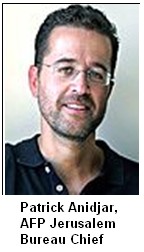
HRC Launches "Insider's Briefing" Series A Conversation with Patrick Anidjar, AFP Bureau Chief in Jerusalem
June 26, 2008 We are pleased to announce the launch of our "Insider’s Briefing" Series which will feature exclusive interviews from prominent members of the Canadian and international media elite. The briefings are designed to provide an insider’s perspective on the Middle-East and reporting in the region. In our inaugural interview, Paul Agoston, HRC’s Assistant Director in Montreal, sat down with Patrick Anidjar, Agence France-Presse’s Jerusalem Bureau Chief, to discuss the various strategic threats facing Israel and the international media’s coverage of the Middle-East. Please read the full interview transcript below.
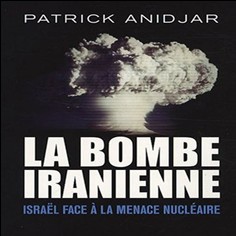
Patrick Anidjar (AFP): Thank you. Paul Agoston (HRC): Israel views Iran's nuclear development as a serious existential threat. The New York Times recently reported on Israeli military training exercises in preparation for a future strike against Iran's nuclear facilities. Have the broader international media fairly reported on the threat that the Iranian nuclear program poses to Israel? Patrick Anidjar (AFP): This is one of the most important questions nowadays. The nuclear threat has issued (generated) a huge number of papers, stories, books, conferences all around this very issue. I think the amount of papers, stories, articles in the world press is so important, it is absolutely impossible to count them. Meaning, I think that, mostly, the world takes this threat very seriously, the press is taking this threat very seriously and I think it’s not only a good story as we said, but it is a very important story to report on, because the risk, the danger is very, very big here. No one is playing with that and everyone is aware of what could happen if we don’t talk about it. I just want to remind (you) what happened before the Second World War. I think the role of the press at that time was not exactly the same as today. I’m sure that if Jews all around Europe would have been informed in a better way by the press at the time, maybe things would have been different.
Paul Agoston (HRC): Can you tell us what is the most under reported story in the Middle-East and why? Patrick Anidjar (AFP): It’s really hard to answer that question. It could be the story of the refugees, the Palestinian refugees living in refugee camps all around the Arab world. In Lebanon, Jordan, part of them in Egypt, also the Palestinian community living far from Palestine in the Gulf or elsewhere. I think it’s a really under covered story. Paul Agoston (HRC): Are the media biased against Israel? How do you respond to criticisms that AFP’s coverage is biased? Patrick Anidjar (AFP): The media bias against Israel is also a very important question. I think it is a very sensitive question. It is very difficult for the media to stay objective when you cover such a conflict as the Israeli-Palestinian conflict. Obviously, some media are not aware of the whole story as it was at the beginning. So maybe some reporters are coming to the country just to cover part of the story without knowing what is the precise background. So maybe the result of it, you can see that in a lot of papers, the result is biased obviously. But it’s not something new, it’s something also related to the very difficult story between the Jewish people and the rest of the world. It’s also part of it, I don’t want to get into this, it’s too complicated. But of course, you have some reporters doing a very, very bad job, not going to both sides of the story, just one-sided. Of course, the result of it as I’m saying is biased. But it’s very hard to change that, you just have to work on it. In regard to criticism that AFP’s coverage is biased, I must say that a lot of work has been done in the past years to change the way we report, to change the way we source our stories, the way we use certain terms, very controversial terms like terrorism, activist, militant, suicide bombers, settlers. These are very charged, very heavy terms and we are very careful with those words and it was not the case, let’s say 3, 4, 5 years ago. So, we are very aware of the criticism and we are working on it. Paul Agoston (HRC): BBC reporter Alan Johnston was kidnapped while reporting in Gaza not so long ago. Can you tell us what safety precautions you take when on the job? Patrick Anidjar (AFP): Everything has changed since Israel pulled back from the Gaza Strip. The job in Gaza is very different now, it’s very dangerous. You have to take a lot of precautions when you send people there. At first, we decided not to send foreigners after what happened to Alan Johnston. The decision was made not to send any foreigners and to send Arab people, Arab journalists to cover the story. That’s what we are doing basically today, because these people are able to talk to everybody, they are much more, in a better way, accepted by the population down there in Gaza. So it’s much more secure for them, actually it’s very safe for them to go around, to ask people and to write stories. Of course, I know that these are Arab speakers, but it doesn’t mean they are biased. They all are, I’m speaking for my company, they are all AFP journalists and they are very objective and they are doing a great job. Paul Agoston (HRC): The old news maxim "if it bleeds, it leads" is certainly true in Mideast reporting where the daily focus of journalists is the violence between Israelis and Palestinians. Why is it that we rarely hear about happy news in the Mideast? Patrick Anidjar (AFP): The fact that you don’t hear about happy news doesn’t mean that we are not covering happy news. We are covering a lot of cultural news; we are covering a lot of scientific news. A few months ago I was in Japan to cover Ehud Olmert’s first official visit in Tokyo and we reported on the cooperation between Japan and Israel on the scientific and high-tech level. I think it was a very positive story, it was a true story, it’s something happening there, the cooperation between both countries on the high-tech level. So no, we are covering, let’s say “happy news.” But it’s true, I mean a better lead is when it bleeds, it’s a much better lead. Of course, you don’t report about trains getting on time at their destination, never, it’s not interesting. You would report on a train which derailed at some point during the trip, but you never cover the train getting on time.
Paul Agoston (HRC):
Next to Moscow and Wash Patrick Anidjar (AFP): Things have changed. It was true a few years ago, but today the media send less foreign correspondents. The reason is that people are passionate about this conflict. This conflict has an influence on the rest of the world. Paul Agoston (HRC): But there are other conflicts in the world. Why this conflict? Patrick Anidjar (AFP): This conflict has an influence on the rest of the world. When Bin Laden sends his planes on the towers in Manhattan, he says it’s for the Palestinian people. This was the biggest event of the past few years. It’s a conflict that has ramifications everywhere. And it’s the old story of the Promised Land, the Holy Land, etc; I won’t get into this. The explanation is there, everyone is interested in the Promised Land. Paul Agoston (HRC): Israeli cities like Sderot and Ashkelon continue to bear the brunt of Qassam attacks, and as citizens play rocket roulette, the media seems to have ignored their plight. Why is this? Patrick Anidjar (AFP): My answer is very simple. We send someone in Gaza to cover a story there, at the same time we send someone in Sderot, but not just in Sderot, in the kibbutz around, all the kibbutzim next to that region. I’m personally sending people there to cover all the time, all the time, all the time. Photographers and reporters and we have one photographer on a permanent basis paid in that area to cover in case something happens there. Paul Agoston (HRC): Why is it that we never hear about those stories? Patrick Anidjar (AFP): It’s the choice of the media (outlets) when they pick up stories from the wire. This is a choice, we cannot influence that choice. We are reporting, we are doing our job reporting what is happening. Afterwards, they do whatever they want. It’s a real problem. There’s the other problem which is very important is that you can take a news brief and cut it and take pieces, this is allowed. So, you do need to mention that it’s a brief from AFP, Reuters, AP or whatever, but you can cut them. The result is incomplete stories. It is possible that stories are reported but are missing the part concerning Sderot. It is very possible, it must have happened. Paul Agoston (HRC): Do you have anything else that you would like to add? Patrick Anidjar (AFP): I think that to criticize the work of a journalist, one has to understand it well. I think it’s very important. One has to understand all of it: the difficulties, who one is speaking to, to know if we are dealing with someone honest or dishonest and one has to understand the context. One can’t just say that all journalists are biased, that all that goes on in the Mideast is biased, that what we say about the Mideast is biased. One can’t speak this way. One has to investigate, to do investigative work and to see how we work, in what conditions. We are threatened sometimes; it happens very often that we are threatened. We have journalists who have even been abducted, AFP people abducted. If we’re so pro-Palestinian, why are they abducting our journalists? It doesn’t make any sense. It’s not Israelis abducting our journalists. So, we work in very difficult conditions, we are very often put in danger and to do the work of informing public opinion worldwide, as we write in all languages, well it’s a mission. It’s a mission which is not always easy to complete. So one needs to know this before criticizing. HonestReporting.ca |


 ington,
Jerusalem has the third highest concentration of journalists
in the world. Can you estimate why this is the case?
ington,
Jerusalem has the third highest concentration of journalists
in the world. Can you estimate why this is the case?